




What is a Cross Connection?
A cross connection is a point where drinking water can accidentally come into contact with water that isn’t safe to drink. This can happen when a hose, pipe, or plumbing fixture connects your clean water supply to something that could be contaminated, such as a bucket, pool, or chemical sprayer.
Why does this matter?
If water flows the wrong way (called backflow), chemicals, dirt, or bacteria can get into your drinking water. This can make people sick.
What is Backflow?
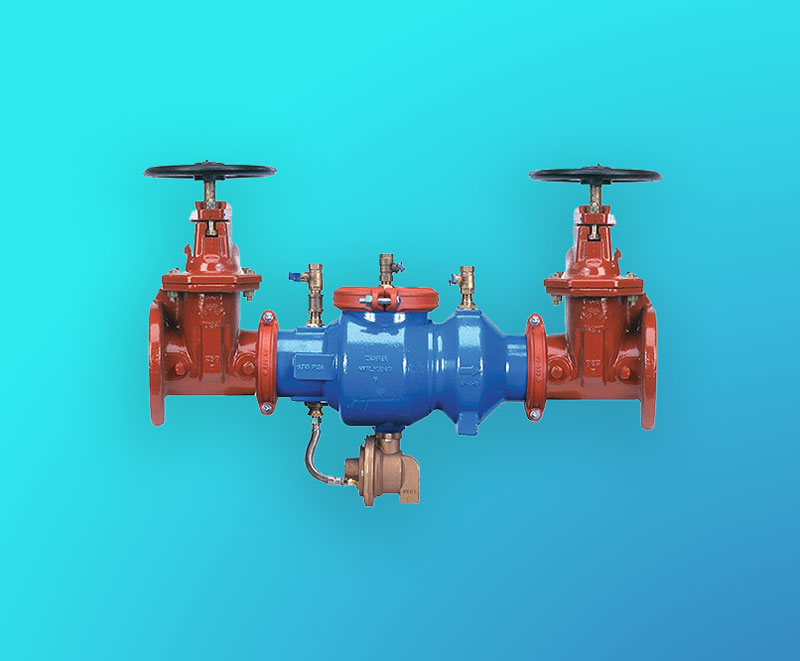
Backflow occurs when water flows in the opposite direction and can allow contaminants to enter the drinking water system. Backflow prevention assemblies and regular testing protect public health and keep facilities compliant with local and state regulations.
Two Types of Backflow
BACK SIPHONAGE
Back siphonage occurs when there is a negative pressure (a vacuum) in the water supply system, causing water to flow backward from a non-potable source into the potable water system. This can happen during events like a water main break or when a large amount of water is suddenly drawn from the system (e.g., firefighting). Essentially, the pressure drop “sucks” contaminants back into the drinking water supply.
BACK PRESSURE
Back pressure happens when the pressure in a non-potable system becomes greater than the pressure in the potable water system, forcing water to flow in the opposite direction. This can occur when pumps, boilers, or elevated tanks create higher pressure than the supply line, pushing potentially contaminated water back into the drinking water system.
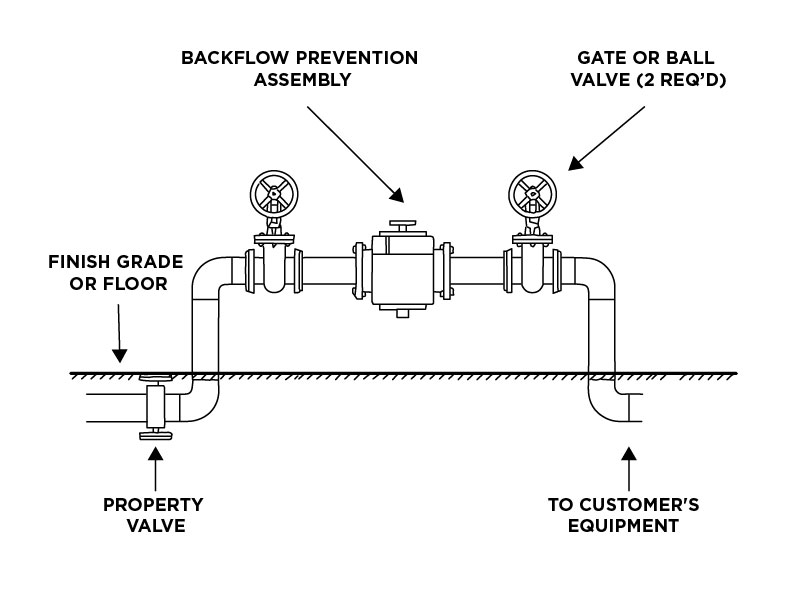
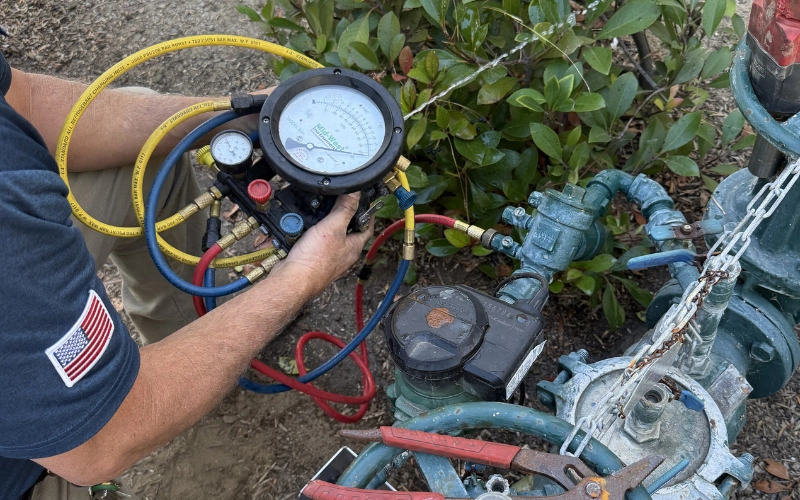
Photo Credit: Hansen's Plumbing, Ventura
Properties with Backflow Devices Must Test Them Annually
Why testing matters: It verifies your backflow prevention assembly is functioning properly and safeguards the public water system.
How often to test: All backflow prevention assemblies require annual testing. Some assemblies may require more frequent checks depending on use and risk level.
Backflow Testing Notices: If you have a backflow prevention device, you’ll receive a notice and test form from BWP in the mail before your test is due. Notices are sent one month before your compliance month.
For example, if your backflow test is due on February 28, 2026, your notice will arrive in January 2026.
How to Test Your Backflow Device
Select a Backflow Tester
Backflow prevention device testing must be performed by an American Water Works Association (AWWA) certified tester. Below is a list of AWWA-certified backflow testers authorized to operate in the City of Burbank. Homeowners and businesses may select any tester from this list to complete the required testing.
Please note: The list of AWWA-certified backflow testers is provided as a public resource, and BWP makes no guarantees or representations, and assumes no responsibility or liability, as to the quality of work performed by these contractors.
Important Update: Backflow Tester Certification Changes
Effective July 1, 2026, the State Water Resources Control Board will require certification for meter protection backflow testers through a recognized provider. LA County Public Health's certification will no longer be valid for this purpose, but will remain valid for internal backflow assemblies.
When selecting a backflow tester, please verify that the tester holds a valid certification from a certifying organization recognized by the State Water Resources Control Board (SWRCB).
- Review the Backflow Installation Sheet. This document contains important information on installing backflow devices in Burbank.
- Ensure the assembly is accessible (clear vegetation, remove obstructions).
- Provide site contact and access info to your tester.
- Your certified tester will temporarily shut off water at the assembly.
- The assembly is tested per approved procedures.
- You’ll receive a completed test report for submission to the City. The submittal process is typically handled by the tester.
- Repair or replace if the assembly fails; then retest and submit.
Testers must submit the completed backflow test through our SwiftComply portal. If a tester is not registered with SwiftComply, they can register by navigating to this link.
- If testing is not provided to BWP by the due date as shown on the Backflow Assembly Test Report, BWP may hire a private plumber to do the testing on your behalf. You will be charged for the full costs to perform the Backflow Assembly Test, plus an additional $65.00 administrative fee.
- Failure to submit a test form for a backflow prevention assembly that has passed testing requirements is considered a cross-connection violation and must be corrected. Non-compliance may result in water service termination and/or fines.
- In cases where water service must be shut off to protect the public water system, the local health department, fire department, law enforcement, and BWP manager may need to be notified.
Stay Connected
