



Solar Net Billing Program and Rate Info
Have a question? We're here to help! Find answers to our frequently asked questions about Solar Net Billing.
BWP has a strategic objective of aligning rates with costs and balancing affordability and sustainability. NEM 1.0, the current rate program, overvalues the energy that customers export to the grid, and when BWP overpays for electricity, that cost is spread to non-solar customers. The overvaluation of energy due to NEM 1.0 is inherent to the structure of NEM 1.0, as NEM 1.0 uses a solar credit system, which means the value of solar energy equals the retail rate of energy.
For residential customers on the tiered rate, the rate is 14.71 – 22.49 cents. BWP has calculated the value of customer-generated solar energy, called the Avoided Cost of Energy (ACOE), and it is worth between 6.66 and 11.56 cents, depending on the time of day it is delivered to the grid. So, why is the ACOE less than the retail rate? It's because energy sent to the grid by solar customers doesn't carry the other costs to serve that the utility does.
Retail rates must cover everything that BWP provides to its customers – reliability, grid maintenance, billing, customer service, and all other operating costs. When a customer sends solar energy to the grid, it doesn't eliminate those additional costs to the utility. So, under the new rate, BWP will compensate customers for the cost that has been saved, which is the cost of the solar energy itself, plus its renewable attribute.
Therefore, to meet BWP’s strategic objective of aligning rates with costs, NEM must change. The solar net billing rate is the best option for meeting that objective, and it is aligned with industry best practices for developing a NEM successor program.
Yes, as an existing solar customer, you will be grandfathered into your existing NEM 1.0 rate structure. This does not exclude you from rate increases, but it will exclude you from moving to the solar net billing rate and program. Your grandfathering period will be 20 years from the launch day of the new Solar Net Billing program.
As long as a customer has applied for a permit before the date that the new program goes live, then the customer will be grandfathered into the NEM 1.0 rate.
Any change requiring a new interconnection agreement will end your grandfathering period. This includes a change in property ownership or upgrades to the system. Only upgrades that add to an existing system would require a new interconnection agreement, not routine maintenance. This includes adding additional solar panels that increase the system size, or adding new battery storage to a solar system. Replacing an existing panel with a panel of the same wattage, or replacing any broken parts like an inverter would not trigger a switch to Solar Net Billing.
There is no specific date for these changes to go into effect. As this program is not yet approved by the Burbank City Council, it will still need to go through that approval process. BWP must also complete some currently in-progress technology upgrades before it institutes the rate. The current estimate for approval and implementation of the new rate is in the March-June time range of 2025.
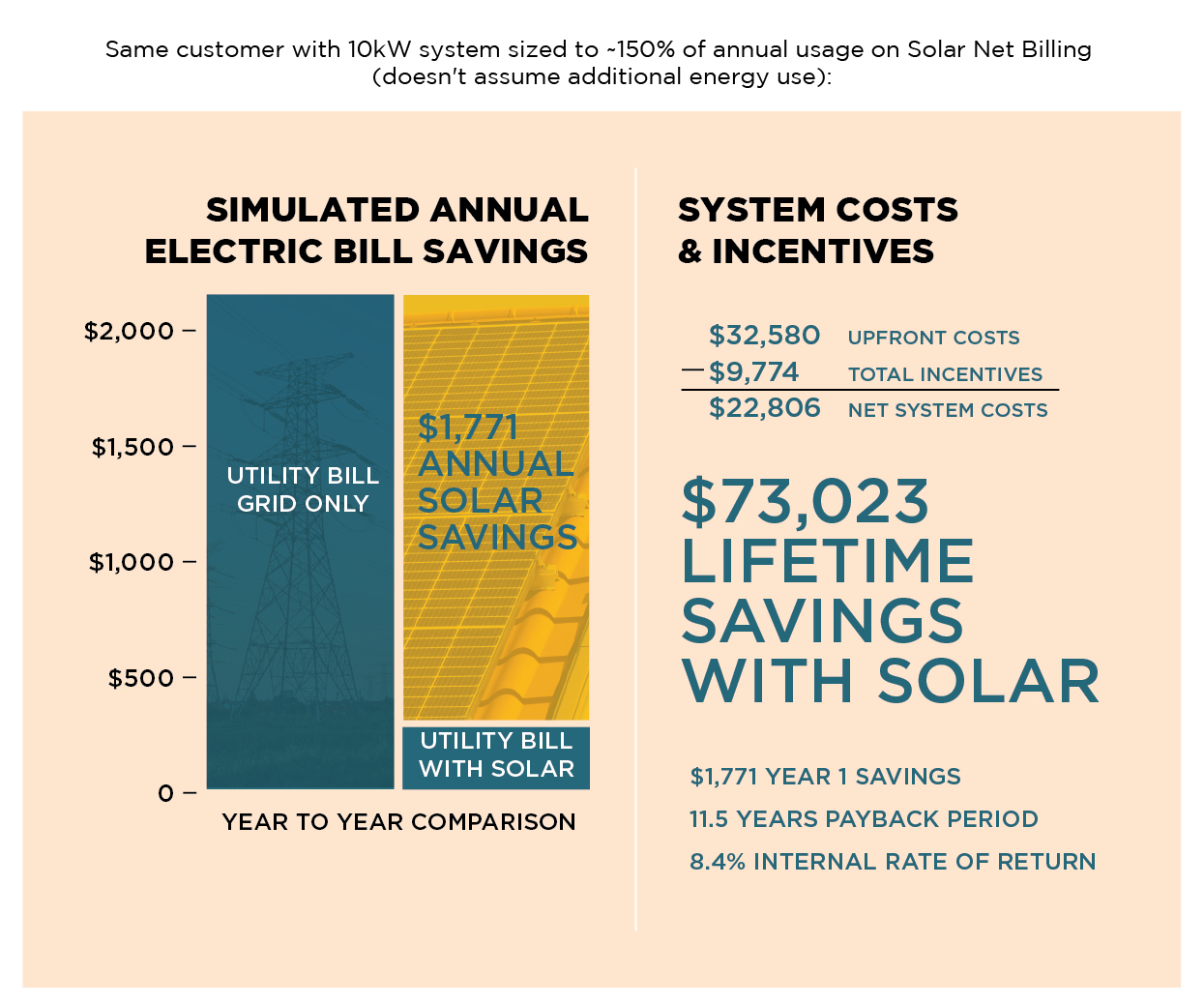
The current program allows customers to size systems to generate electricity up to 100% of their historical annual energy use. The proposed new program will allow customers to size systems up to 150% of their historical energy use, so customers should be able to generate enough electricity to cover their energy needs, and more, which could include future electric upgrades. In some cases, customer roof space may limit their ability to install a system large enough to cover annual energy use.
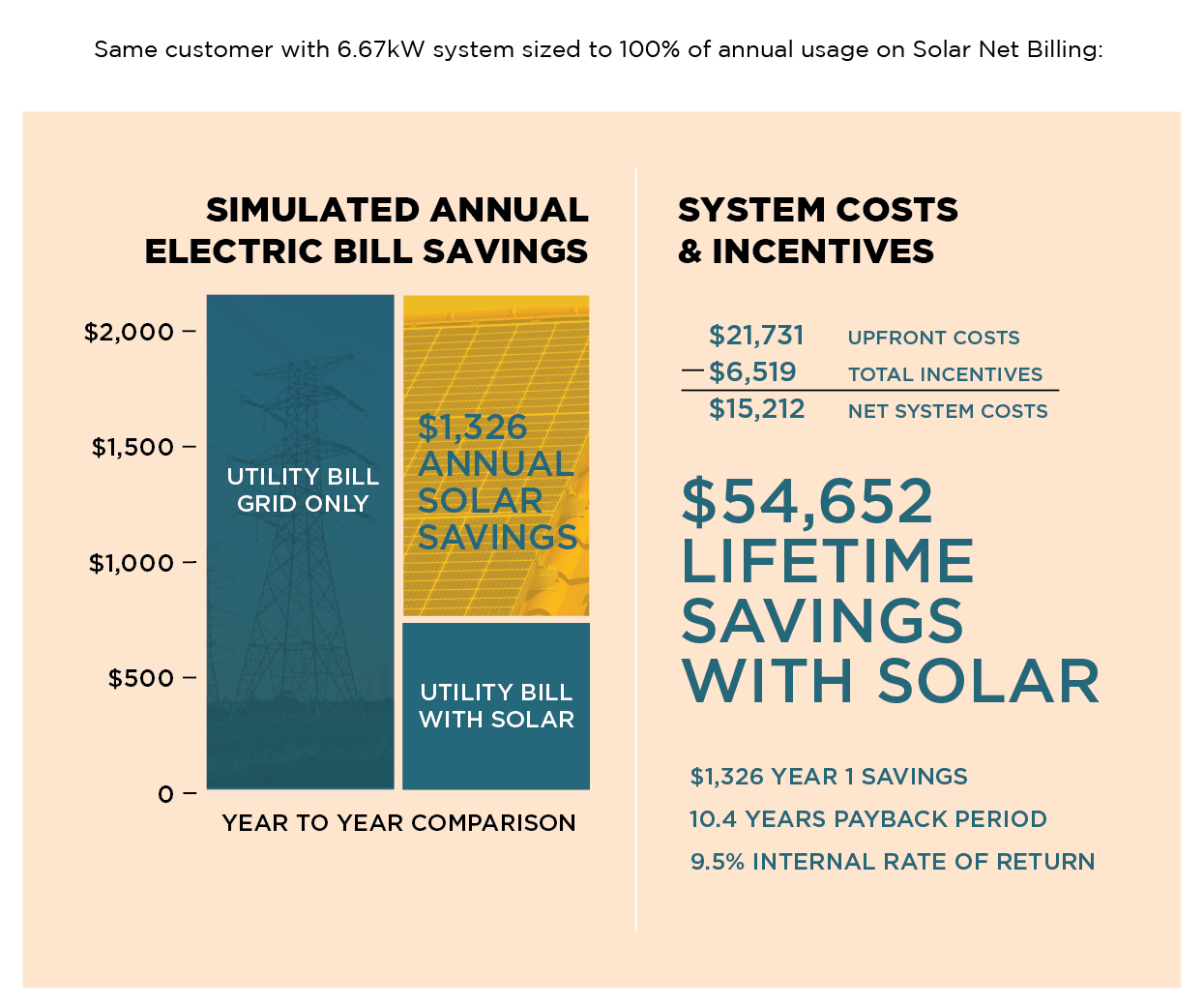
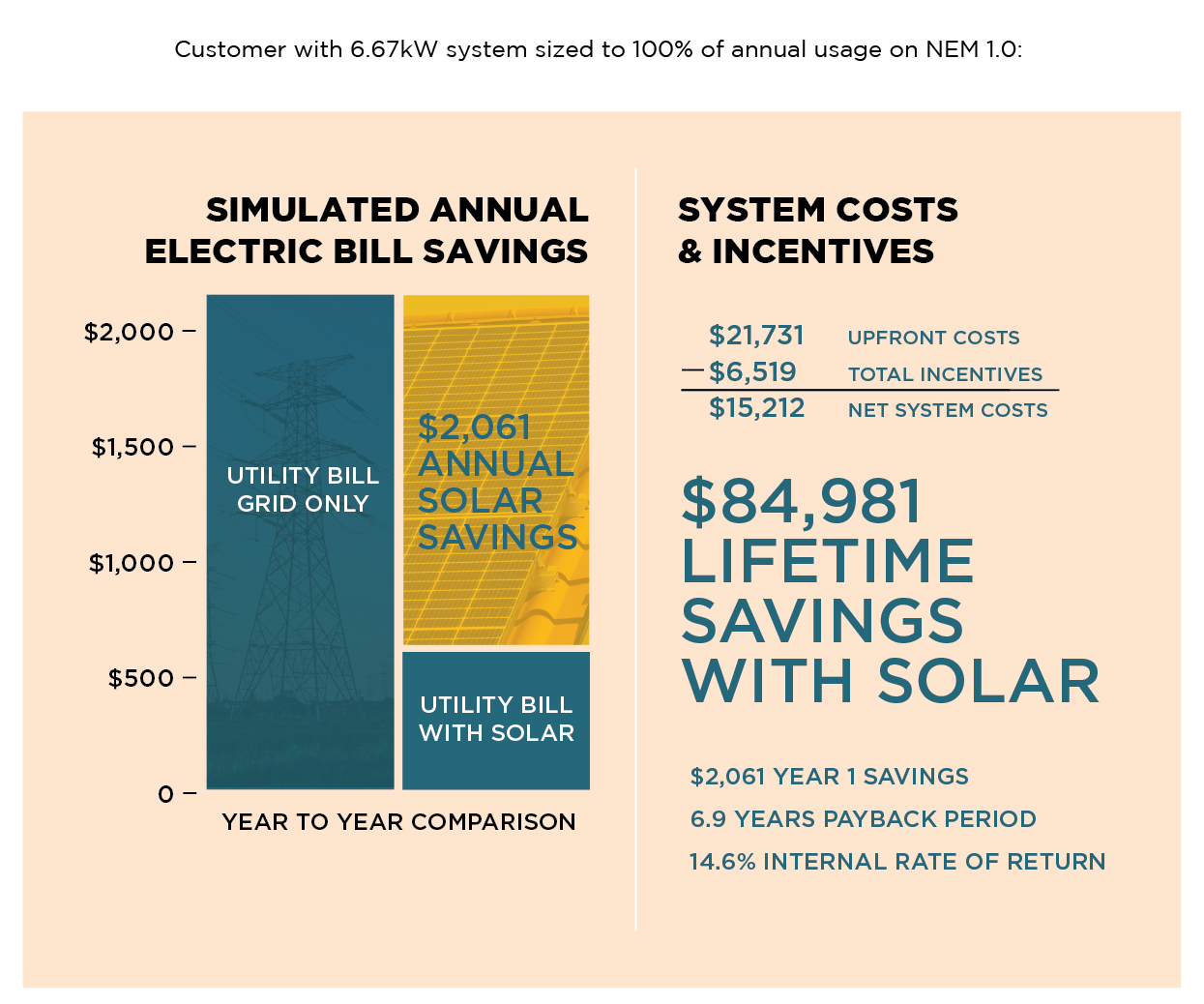
While the new rate, with oversizing, can lead to smaller monthly bills than under the current NEM 1.0 rate, the new rate is anticipated to increase payback periods. The payback period is partially determined by customer energy use. Under the current NEM 1.0 system, BWP staff estimate that payback periods range from 6-9 years. Under the new program, with oversizing, staff estimates that payback periods will range from 8-11 years.
Here are example payback periods for different rate scenarios.
 |
 |
 |
| Click here to enlarge. | Click here to enlarge. | Click here to enlarge. |
BWP is not planning to offer rebates for solar systems. Customer solar adoption has increased due to decreasing costs to install solar, and there is an existing federal tax credit that covers 30% of the installed cost.
Yes, BWP is currently researching and developing an incentive for energy storage systems. While solar system adoption has increased, battery storage installations have not increased at the same pace. BWP would like to encourage battery storage installation as it can lead to more efficient use of solar energy, allowing customers to use solar energy during peak periods when the sun is setting and electricity is generally more expensive for BWP to purchase.
We often get questions about where to find reputable solar installers. BWP does not endorse any companies, however, below are some resources for informational purposes.
The Switch is On - https://switchison.cleanenergyconnection.org/
EnergySage Marketplace - https://www.energysage.com/shop/home-solar/
Electrum Marketplace - https://www.electrum.co/
Better Business Bureau - https://www.bbb.org/us/ca/burbank/category/solar-installation/accredited
The CSRA is part of the California Civil Code (CA Civil Code 714) and was originally enacted in 1978 to bar restrictions by homeowner associations (HOAs) on the installation of solar systems. It protects you as a homeowner from being restricted from installing a solar system, and it restricts votes from the HOA from barring solar systems from being installed in common areas.
- In 2008, AB 2180 added that any HOA that is not a public entity that willfully violates the CSRA must pay the solar system owner a civil penalty not to exceed $1000 and that the approval or denial of the solar system must be made in writing within 60 days or the solar system will be deemed approved.
- In 2014, AB 2188 defined that HOAs are allowed to impose restrictions on solar systems as long as those restrictions don’t add more than $1,000 to the cost to install or limit the system's efficiency by 10% or more.
- In 2017, AB 634 extended protection to solar system installations in common areas and limits HOAs from establishing a general policy prohibiting the installation or use of a rooftop solar system for household purposes on the roof of the building where the owner resides. It also prohibits the association from requiring a vote of homeowners to install a solar energy system, including systems installed for common areas. However, an association may impose reasonable provisions that restrict the installation of solar energy systems in common areas to those systems approved by the association.
Stay Connected
